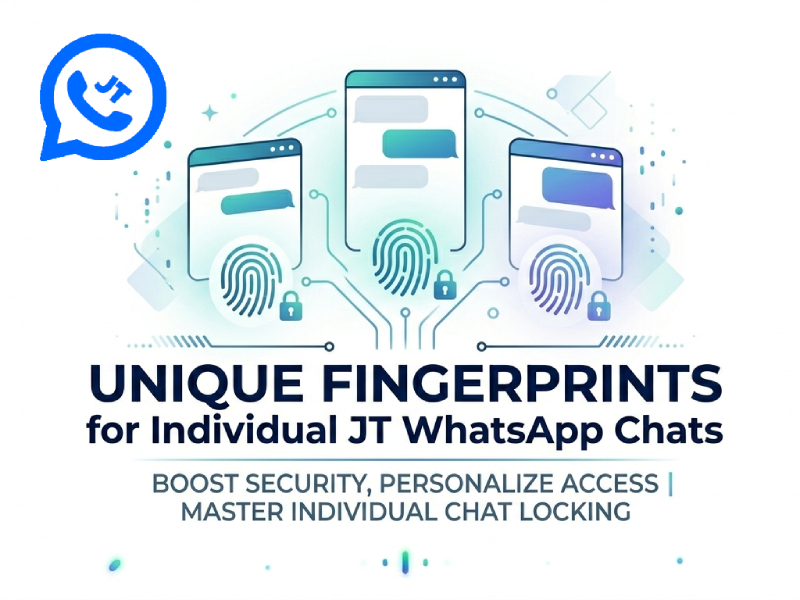
In JT WhatsApp, you can set a unique fingerprint for each conversation. This feature allows you to identify messages in a way that is specific to each chat, giving you better control and a clearer understanding when managing multiple chats. If you are using the JT WhatsApp latest version download, you can easily access this option and customize fingerprints for different contacts or groups. We have discussed how to set up two-step verification for extra security in JTWhatsApp. This article will explain what unique fingerprints are, how to set them up, and how they compare to regular message management.
What Are Unique Fingerprints
In JT WhatsApp, a fingerprint acts like a digital signature unique to a single chat message. You can think of it as a unique ID that makes your conversations instantly recognizable. Whether chatting with friends, in groups, or with business contacts, you can have your own fingerprint. This differs from ordinary chat names or phone numbers because fingerprints can be fully customized. Many users also prefer JT WhatsApp APK no ads, as it allows them to focus on personalizing chat fingerprints and managing conversations without unnecessary distractions, creating a cleaner and more organized messaging experience.
Fingerprints are not just for decoration; they can also help apps track messages more clearly. For example, if you receive the same type of message in multiple chats, fingerprints can help you quickly identify the chat to which the message belongs without opening the chat window.
Other useful points about fingerprints:
- Customizable: You can create fingerprints using letters, numbers, or even symbols, making them easier to remember.
- Unique for Each Chat: Unlike a contact’s name, which may appear repeatedly in multiple chats, a fingerprint is specific to that conversation.
- Organization: Fingerprint recognition can help you distinguish between private chats and work chats, group discussions and one-on-one messages, and even important chats and ordinary chats.
- Recognition: When browsing chat lists, fingerprints can provide additional visual cues, so you don’t have to rely solely on names or avatars.
The unique fingerprint feature adds a small but powerful layer of organization to JT WhatsApp. It makes conversations more organized, easier to manage, and less prone to confusion, especially when multiple chats are happening simultaneously.
How to Set Up Fingerprints
Setting up unique fingerprints is straightforward. Here is a step-by-step guide:
Setting up a personalized fingerprint for conversations in JT WhatsApp takes only a few minutes but can greatly simplify chat management, especially if you frequently communicate with many contacts or groups. If you are wondering how to set up JT WhatsApp fingerprint, the process allows you to assign unique visual identifiers to different chats, making it easier to recognize conversations at a glance and organize your messaging experience more efficiently.
Open JT WhatsApp and enter the conversation where you want to create a fingerprint. This could be a private chat, a family group, a work discussion, or any conversation you want to be more easily identifiable.
Next, tap the contact’s name or group name at the top of the screen to access the chat information page. This page contains various customization options related to this conversation.
Find the “Fingerprint” or “Chat Fingerprint” option in the settings. After selecting, you can create a custom identifier for the chat. Many users prefer to use a combination of letters and numbers because it is easy to remember and maintains uniqueness. For example, you can use code that reflects the purpose of the chat, such as a work-related, private, or project-related conversation.
Enter your preferred fingerprint and save the changes. The fingerprint will then be associated with the conversation, which you can use when you need to distinguish it from other conversations.
Creating a standardized chat fingerprint is a good idea. For example, work chats can start with “WK”, family chats with “FM”, and interest groups with “HB”. A structured system makes fingerprints easier to identify at a glance and helps keep the chat list organized as it grows.
After saving the fingerprint, open several other conversations and assign them different identifiers. After setting fingerprints for multiple chats, you’ll quickly find that you can easily identify conversations without relying solely on contact names or group names.
If the purpose of chatting changes over time, you can always go back to the chat settings and edit your fingerprint. This flexibility allows your organizational system to remain effective even as your messaging habits change.
Comparing Unique Fingerprints and Standard Chat Labels
It is helpful to see how fingerprints differ from the standard chat labels in JT WhatsApp. The following table summarizes the main points:
| Feature | Standard Chat Labels | Unique Fingerprints |
| Identification | Based on contact name or phone number | Custom digital signature for each chat |
| Customization | Limited to name changes | Fully customizable with symbols, letters, and numbers |
| Message Sorting | General sorting by chat name or time | Can sort and recognize chats by fingerprints |
| Clarity | Only shows contact info | Shows a specific fingerprint in addition to contact info |
Practical Uses of Fingerprints
The unique fingerprint recognition feature is very useful in many everyday scenarios, especially for users who need to manage a large number of conversations. In addition to contact names or group titles, fingerprint recognition can provide an additional way to distinguish chat history and help users better manage chat content.
Managing Multiple Group Chats
Many users join multiple groups with similar names or related topics. For example, you might join multiple groups at the same time for work projects, family discussions, gaming communities, or school events. Assigning a unique identifier to each group allows you to instantly identify the correct conversation and avoid confusion when switching chats.
Separating Personal and Professional Conversations
People often use the same instant messaging app for both personal and work communication. Unique identifiers can help users clearly distinguish between these two types of contacts. By assigning different identifiers to work contacts and private chats, users can quickly find the conversations they need without having to scroll through lengthy chat lists.
Organizing Important Contacts
Some conversations require more attention than others. Family, close friends, business partners, or important clients may communicate frequently throughout the day. Assigning unique identifying features to these conversations helps them stand out from less active conversations and speeds up navigation.
Tracking Temporary Projects and Events
Fingerprint recognition is also useful for short-term events, such as event planning, travel arrangements, study groups, or collaborative projects. When creating a new chat group for a specific purpose, unique fingerprints can help quickly identify group members until the project is complete.
Reducing Chat List Clutter
When there are dozens of conversations in a chat list, finding a specific conversation can become difficult. In addition to avatars and chat names, fingerprint recognition can provide another layer of identity verification. This additional management approach can make daily communication more organized and efficient.
Creating a Personalized Chat System
Each user organizes information differently. Some people may prefer to use number-based fingerprints, while others may use abbreviations, symbols, or custom codes. This flexibility allows users to build chat management systems that suit their own habits and workflows, making JT WhatsApp more suitable for long-term use.
By cleverly using unique fingerprints, users can create a cleaner, more organized messaging environment, especially when dealing with a large number of active conversations every day.
Tips for Using Fingerprints
Using fingerprints effectively can make your JT WhatsApp experience much smoother. Here are some expanded tips:
- Keep fingerprints short but clear: Simple combinations of letters or numbers are easier to remember than long strings of symbols.
- Make each fingerprint unique: Avoid using the same fingerprint in multiple chats. This ensures you can immediately identify the chat to which the message belongs.
- Use meaningful symbols: You can add emojis or special characters to highlight certain chats, such as using stars to mark important conversations or briefcases to mark work-related chats.
- Update fingerprints when needed: If the purpose of the chat changes, the fingerprint is adjusted to reflect the new context.
- Group-related chats: If you have chatted multiple times on the same topic, please use a consistent fingerprint pattern for easy identification.
- Combine with notifications: Fingerprints can be paired with chat-specific notifications, so you can see important messages even without opening the chat immediately.
Using these techniques, fingerprints can be a simple yet powerful tool for organizing your messages, quickly identifying chat logs, and managing multiple conversations without confusion.
Conclusion
JT WhatsApp’s dedicated fingerprint feature is simple yet powerful, making it ideal for organizing chat history. By setting fingerprints for each conversation, users can quickly identify messages, differentiate between different types of chats, and manage messages more efficiently. Among the latest JT WhatsApp new tricks, this feature stands out as a practical way to keep conversations well-structured, helping users navigate their chats faster and maintain a more organized messaging experience.
This feature adds more personalization and control options to the standard chat tabs, making JT WhatsApp a more flexible everyday communication tool.